Dryer vent cleaning for Tempe rentals and property managers
Tempe has more rental housing than anywhere else in the East Valley, and rented properties clog two to three times faster. $99 flat per unit, roof included.
Calls answered 7am to 8pm · same-day service usually available
Give us the addresses and a preferred window. We can invoice the management company directly.
Why rentals fail faster
This is not a sales angle, it is arithmetic.
A dryer vent accumulates in proportion to how much laundry goes through the machine. A family of three running four loads a week puts a certain volume through that duct. Four tenants sharing one machine in a house near campus can be running fifteen.
The run does not know it is a rental. It was sized and installed to the same standard as the house next door. It just fills at three times the rate, which means a vent that would take fifteen or twenty years to become a problem in an owner-occupied home becomes one in five.
Every 4 to 6 months for a rental, not every 10. That is the only real difference, and it is the one most owners have never been told.
Source: National Fire Protection Association, Home Fires Involving Clothes Dryers and Washing Machines.
The three things this actually costs you
Dryers, replaced early
A restricted vent makes the machine overheat and trip its thermal fuse repeatedly, running the heating element well past its design conditions on every load. A dryer that should last twelve to fifteen years dies at six or seven.
In a furnished rental that appliance is your line item, and you are replacing it a decade early on a problem that costs $99 to prevent. The landlords we work with regularly are the ones who did that arithmetic once.
Mid-lease call-outs
A tenant whose clothes take two cycles eventually calls you about it, and never at a convenient moment. Then you send an appliance tech, pay a service fee, and get told the machine is fine and the vent is blocked. We hear that story constantly.
This is also why the error code point matters for owners. If a tenant reports the dryer throwing a code, it is the vent about 95% of the time. Check the vent before you pay anyone to look at the appliance.
The risk you actually carry
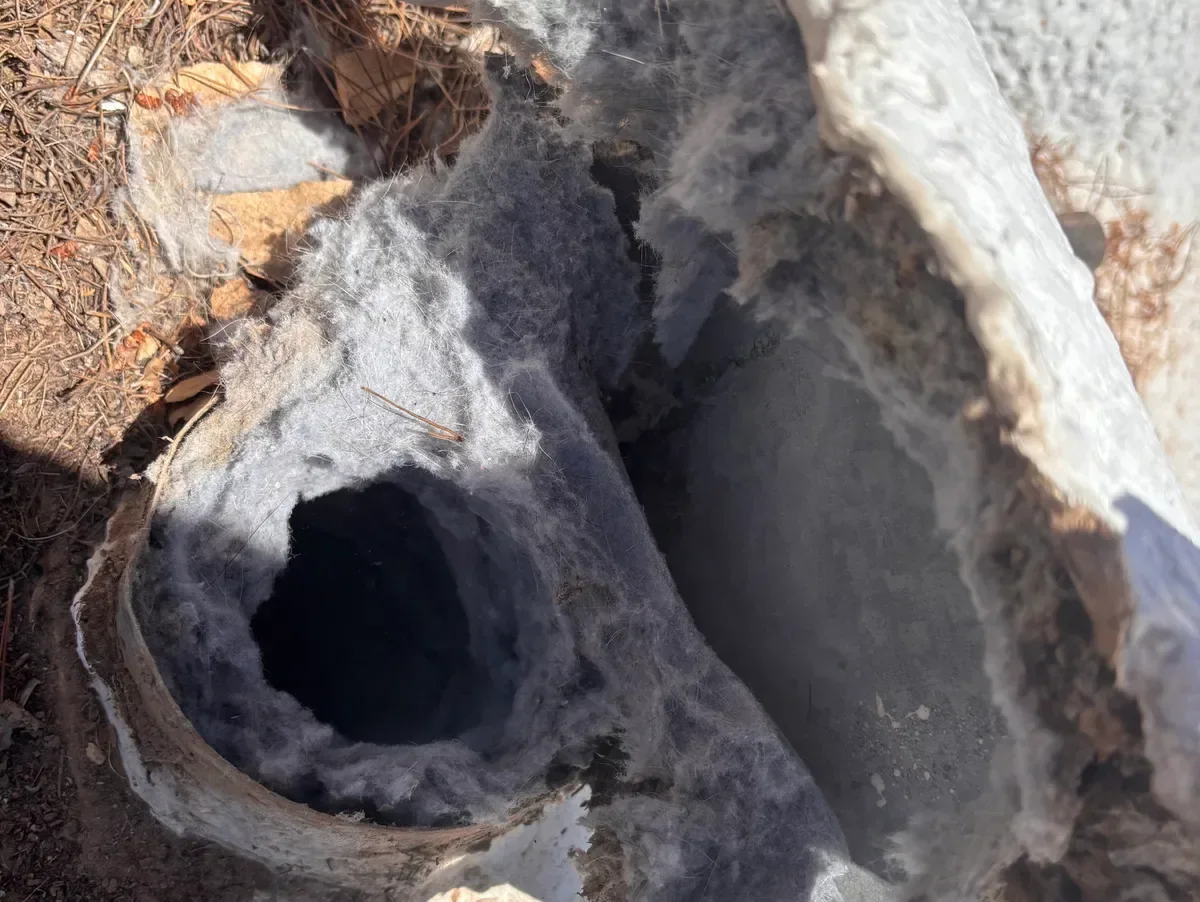
Failure to clean is the leading contributing factor in dryer fires, and lint is the most common item to ignite first. In an owner-occupied home that is the owner's exposure. In a rental it is yours, in a property you do not live in and cannot see.
Turnover is the right time
Most of our rental work happens between tenants and it is the obvious moment for it.
The unit is empty so access is trivial. You are already having it cleaned, probably painted, possibly carpeted. Adding the vent is $99 and it resets the clock on a whole category of mid-lease problem before the next tenant moves in.
It is also the only time you can be certain it got done, rather than relying on a tenant to let somebody in.
How we work with managers
- Invoice the management company directly, not the tenant
- Coordinate access with tenants ourselves if you would rather not be in the middle
- Several units in one visit where they are in the same building or nearby
- One flat price per unit, $99, so your budgeting is trivial
- We tell you which units genuinely needed it and which did not
That last one matters more than it sounds. If you send us to eight units and three of them were recently done, we will tell you that rather than bill you for eight identical jobs.
Where the rental stock is
Concentrated in north and central Tempe, though it is genuinely everywhere in this city. Maple-Ash and Mitchell Park near campus, Escalante and Holdeman, and a lot of the attached housing in central Tempe.
Older housing plus heavy laundry volume is the worst combination for a dryer vent, and north Tempe has both.
Townhomes, condos and shared systems
Most attached units in Tempe have a dedicated run serving only that machine, which makes it the unit owner's responsibility even where it passes through common framing. Some associations have their own rules, so check if you are unsure.
Some older apartment blocks are different: multiple units feeding one shared exhaust system. That is a building-level job, not a per-unit one, and we will say so rather than clean three feet of duct and leave the actual problem in place.
- Inspect the run. We find where it goes and how it terminates, check the exterior cap or roof hood, and look at the transition hose behind the machine. A surprising number of problems sit in the first three feet.
- Work it from the outside with the dryer running. We leave the machine running the whole time we are at the termination, so the air it is pushing carries the lint we agitate straight out of the run instead of letting it settle back down the pipe. It makes a mess outside. We clean that up.
- Work it from the inside. Machine unplugged, hose disconnected, dryer pulled back. We feed the brush through the vent from inside, bring the lint down toward us, and vacuum it up out of the wall rather than leaving it to resettle.
- Both ends on a long run, one end on a short one. A long run with several elbows gets worked from both sides, because a brush fed from one end alone never properly reaches the far half. A short straight run does not need it and we will not pretend otherwise.
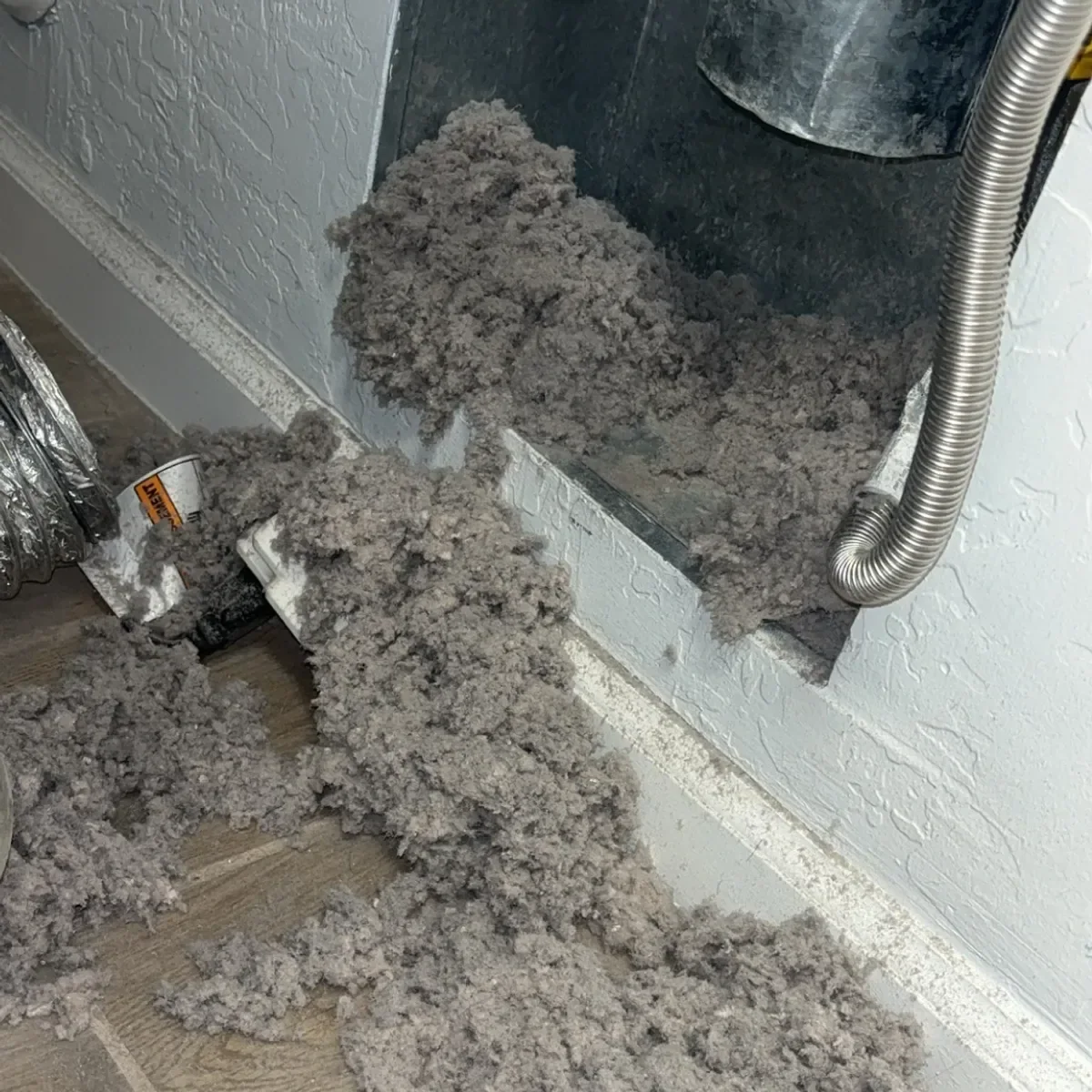
- Put it back and show you. Dryer reconnected where it belongs, run to confirm, and the pile of what came out sitting where you can look at it.
Questions from owners and managers
Do you work with property managers?
Yes, regularly. We can invoice a management company directly, coordinate access with tenants, and handle several units in one visit which is considerably cheaper in time for everybody.
How often should a rental dryer vent be cleaned?
Every 4 to 6 months rather than every 10. A rented property with several tenants sharing one machine runs two or three times the laundry volume of a single household, and the vent accumulates at that rate rather than at the rate the run was sized for.
Can you do it at turnover?
That is the ideal time and it is when most of our rental work happens. The unit is empty, access is simple, and you are already having it cleaned and painted. Adding the vent costs you $99 and removes a whole category of mid-lease call-out.
Does the tenant need to be there?
Not if we have access. If the unit is occupied we will coordinate a time with them directly if you would rather not be in the middle of it.
Do you do multi-unit buildings?
Single-family rentals, townhomes and condos with dedicated runs, yes. Some older apartment blocks have several units feeding a shared exhaust system, which is a different job and a bigger one. If that is what you have, get in touch and we will talk about doing it properly rather than cleaning three feet of duct per unit.
Why does this matter for a landlord specifically?
Two reasons beyond the fire risk. A restricted vent kills dryers early, and in a furnished rental that appliance is yours to replace. And a tenant whose clothes take two cycles will eventually call you about it, usually at an inconvenient time.
Calls answered 7am to 8pm · same-day service usually available
$99 flat per unit, roof included. Call or text 7am to 8pm.