Professional dryer vent cleaning in Tempe, AZ
Ninety-nine flat, roof terminations included at no extra charge. The run gets brushed end to end where it needs it, and the lint comes out where you can see it.
Calls answered 7am to 8pm · same-day service usually available
Give us your street address and a preferred date and time and we will get you scheduled.
- Give us your address and a preferred date and time. That is genuinely it. We are not going to interrogate you about your appliance history.
- Get your price on that call. $99 for a standard vent, roof included. If something about your setup is genuinely unusual you hear that number then, not once we are parked out front.
- We get you scheduled. Most homes land within the same week and same-day is usually available if you catch us early enough. Lines are open 7am to 8pm.
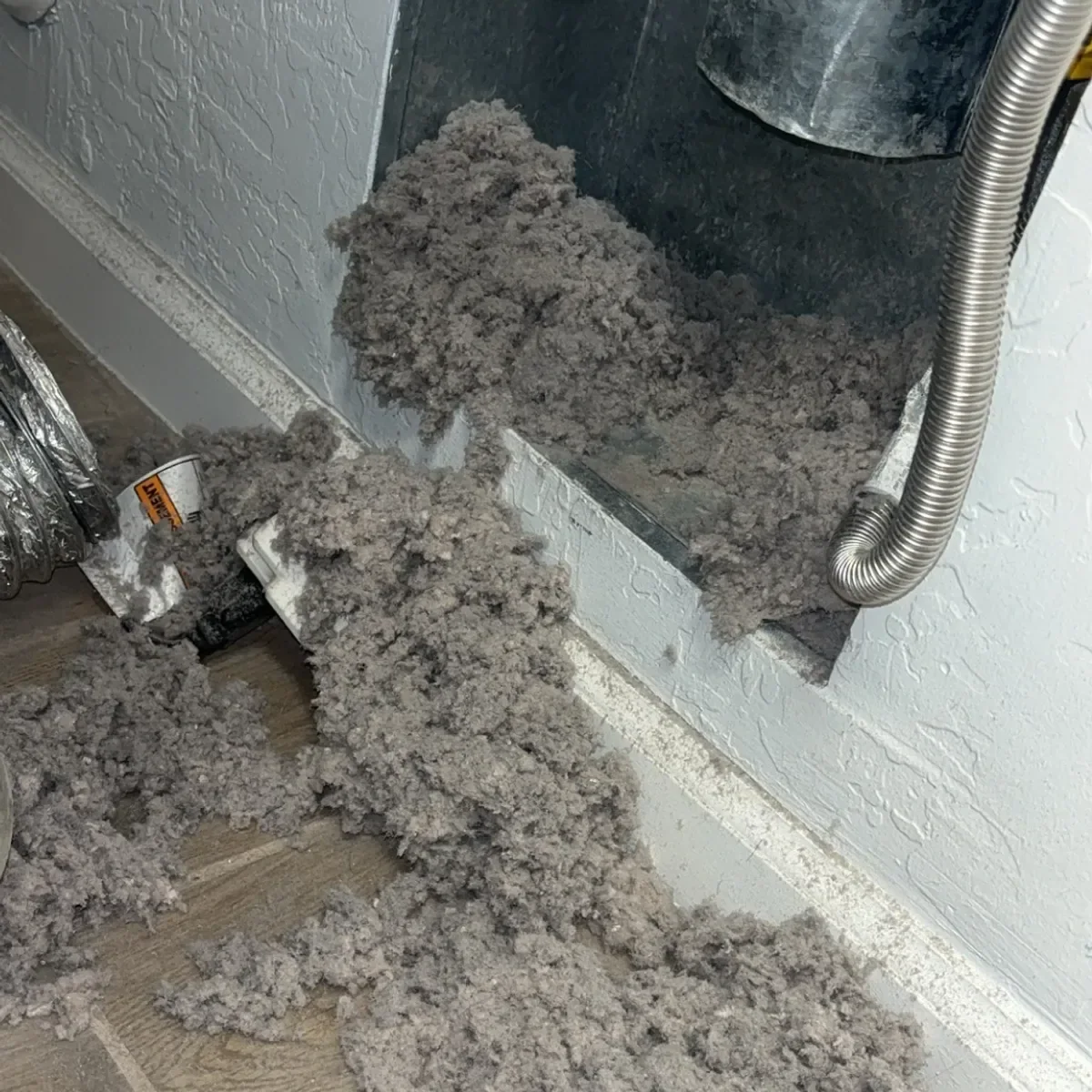
- We do the rest. We move the dryer, clean the run, put everything back, run it, and show you the pile before we go.
Is your dryer throwing an error code?
Start here, because this is the most reliable signal there is and almost nobody tells you about it.
If your dryer is throwing a code, 95% of the time it is the vent.
A modern control board is watching two things: cycle duration and exhaust temperature. Restrict the airflow enough and those two numbers stop agreeing with each other, at which point the machine posts a fault or cuts the cycle short. Every manufacturer names it something different. Underneath the label it is always the same condition, which is that the exhaust is not escaping.
What most people do with that code is call an appliance repair tech, pay a service fee, and get told the machine is fine and the vent is blocked. It happens constantly. If your dryer has started throwing codes, check the vent before you pay anyone to look at the appliance.
Older machines do not have this. They just quietly run hot and take two cycles until something fails, which is why the neglect in Tempe's older housing goes unnoticed for so long.
Tempe is old, dense, and heavily rented
Three facts about this city shape almost everything we find in its dryer vents, and none of them apply to the newer towns around it.
It was built early
Large parts of Tempe went up between the thirties and the sixties. Maple-Ash, Broadmor, Escalante and Holdeman. Many of those houses were not built with a laundry room at all, which means the vent run was retrofitted later, sometimes badly, and often by a previous owner rather than a contractor.
It is built out
Tempe is landlocked. There is no new subdivision going in at the edge of town, because there is no edge of town left. That means the housing stock ages in place rather than being diluted by new construction, and the average Tempe dryer vent is considerably older than the average Gilbert or Queen Creek one.
A lot of it is rented
More rental housing than anywhere else in the East Valley, and rented properties fail differently. Four tenants sharing one machine put two or three times the laundry volume through a run that was sized for a family. A vent that would take twenty years to clog does it in five. We have a page on that.
What Arizona does to a dryer vent
Monsoon season is when you notice
Valley humidity spikes in July and August, and a dryer that was already labouring against a restriction stops coping entirely. The duct did not change. That restriction had been building since winter. Monsoon conditions simply removed your margin, which is why calls cluster in the weeks after the storms begin.
Haboob dust gets into everything, including your duct
Fine caliche dust blows in off the desert, settles into the lint trap housing and the duct, and binds with lint into something denser and more stubborn than lint on its own. A vent in Ohio does not do this.
Sixty summers on a plastic flapper
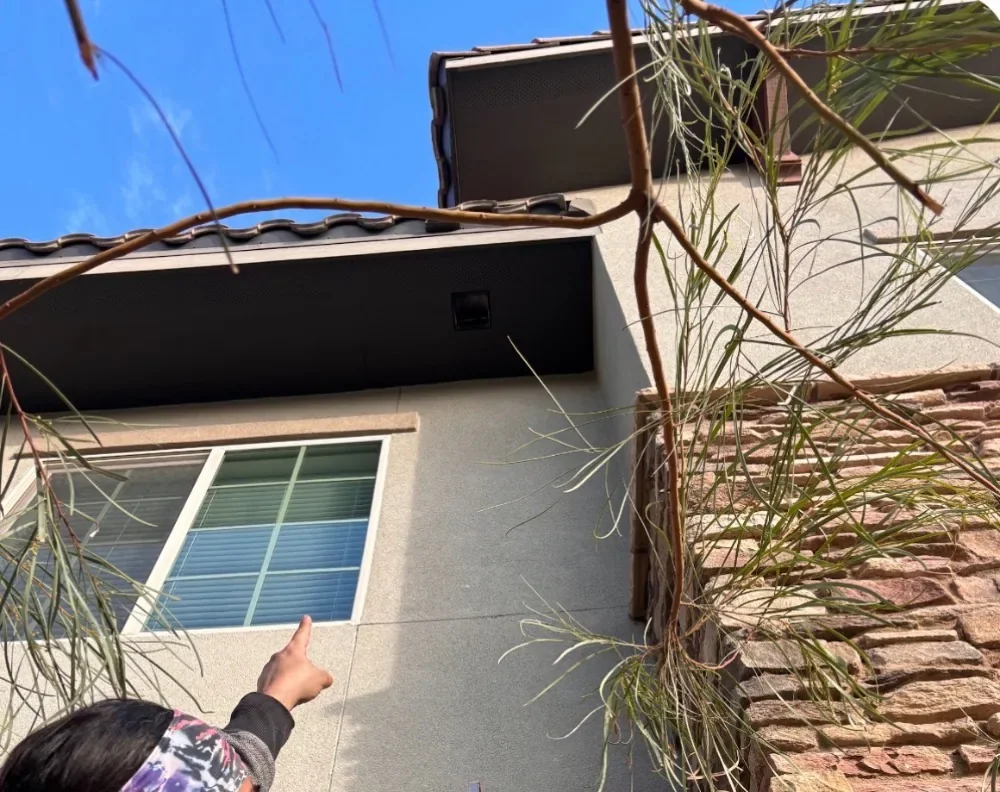
Tempe has some of the oldest exterior vent hardware in the Valley, sitting in 115-degree sun with no shade since the Eisenhower administration. They warp, the hinge seizes, and they stop closing. We find flappers here that have not moved in thirty years.
Tile roofs change how the job is done
The two-story stock in south Tempe is nearly all under concrete tile, which cracks if weight lands wrong, and a cracked tile is a leak the next time the monsoon actually delivers.
Campus turnover means unpredictable load
A rental near campus can go from two occupants to five in August and back again in May. The vent does not know that, it just accumulates at whatever rate the household produces. If you own rental property here, the schedule is every 4 to 6 months, not every 10.
What a blocked vent is actually doing
Think of the machine as an air pump rather than a heater. Room air comes in, gets warmed, passes through the drum picking up moisture, and leaves via the vent. Every part of that depends on the final step working.
Restrict the duct and the moisture stays in the drum. That is what you notice. Three worse things happen underneath it.
The machine is cooking itself
Every machine carries a thermal fuse that kills power on overheat. Restrict the duct and that fuse is intervening constantly while the heating element works far beyond its design envelope. A dryer dying at six or seven years old has usually been finished off by a vent nobody serviced.
You are building a fire risk
The figures below come from the National Fire Protection Association. Failure to clean is the leading contributing factor in dryer fires, and lint is the most common thing that ignites first.
Source: National Fire Protection Association, Home Fires Involving Clothes Dryers and Washing Machines.
Moisture is going into your walls
Every load sends humid air somewhere. Blocked, it backs into the wall cavity. In Tempe's older construction we also find joints that were taped rather than fastened, with the tape long gone, which means the duct has been venting into the structure for years.
Signs your vent needs cleaning
- Your dryer is throwing an error code, which is the vent about 95 percent of the time
- Clothes come out warm but still damp after a full cycle
- You routinely run two cycles for one normal load
- The laundry room gets noticeably hot while the dryer runs
- A burning smell, or a musty one, when it is going
- Your lint screen is catching far less than it used to
- The dryer shuts itself off partway through
- The vent flap outside barely moves, or does not open at all
- It has been more than 10 months, or nobody has ever done it
How we clean it
- Inspect the run. We find where it goes and how it terminates, check the exterior cap or roof hood, and look at the transition hose behind the machine. A surprising number of problems sit in the first three feet.
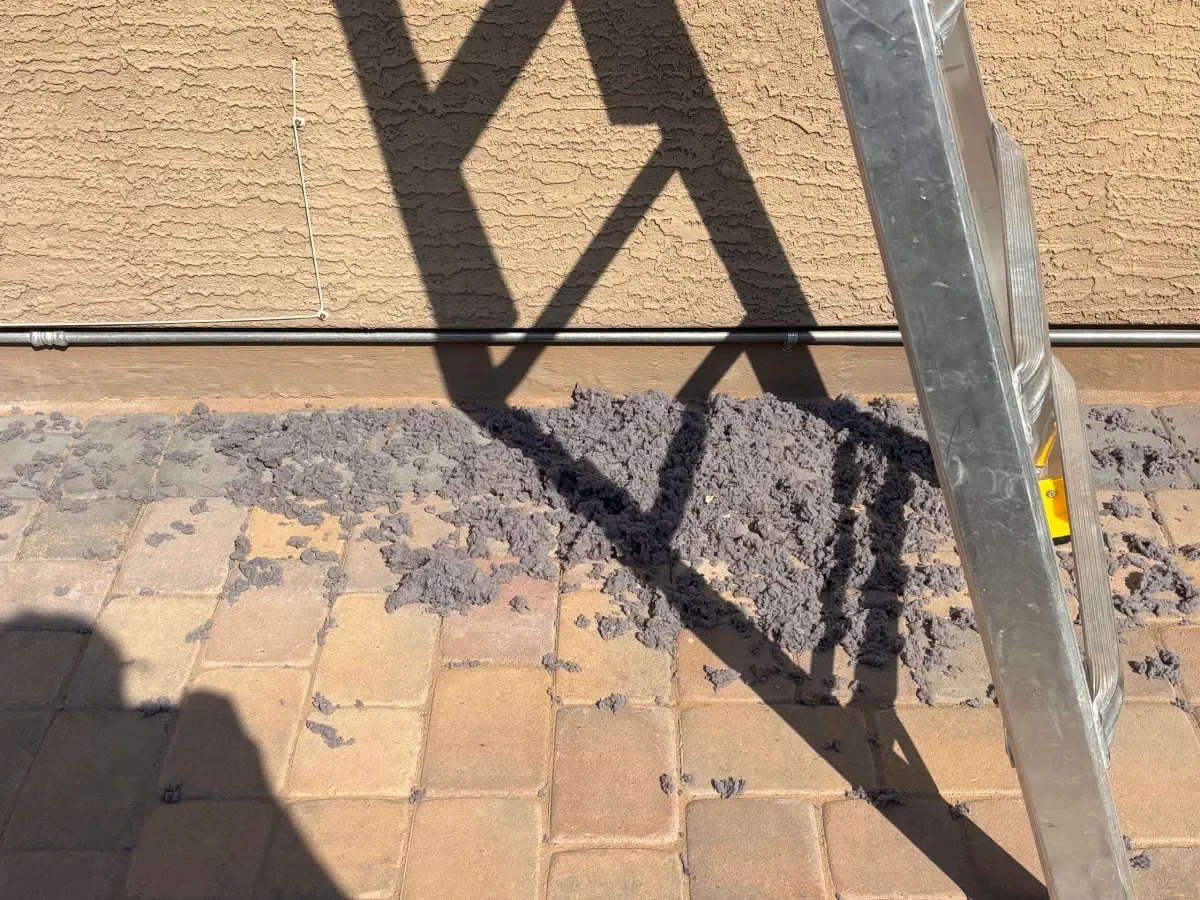
- Work it from the outside with the dryer running. We leave the machine running the whole time we are at the termination, so the air it is pushing carries the lint we agitate straight out of the run instead of letting it settle back down the pipe. It makes a mess outside. We clean that up.
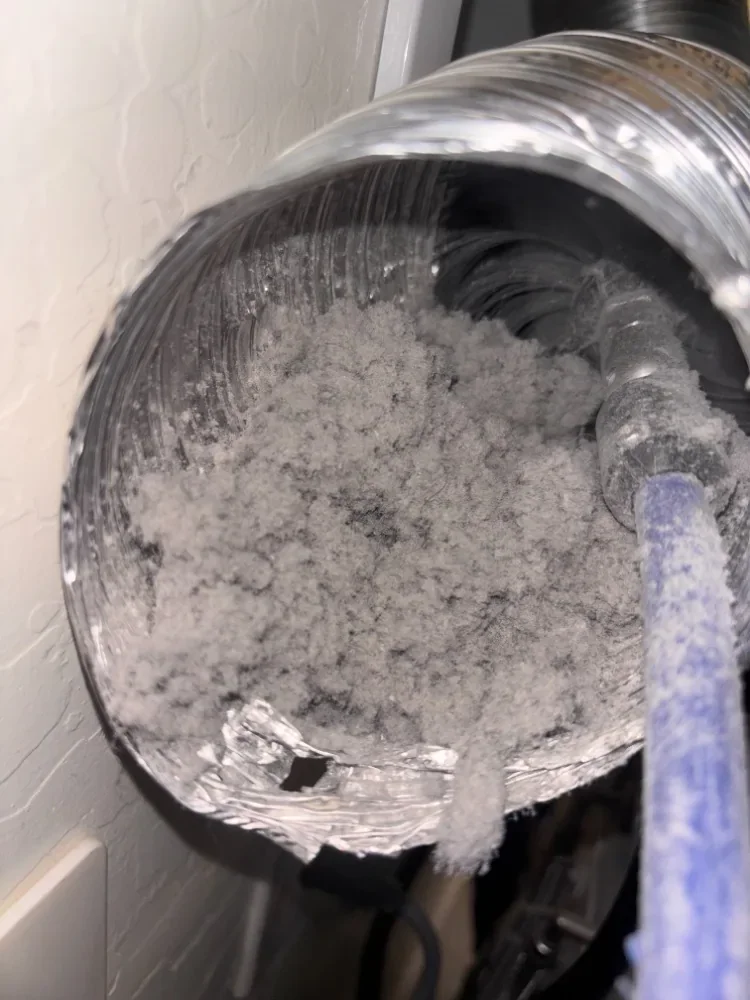
- Work it from the inside. Machine unplugged, hose disconnected, dryer pulled back. We feed the brush through the vent from inside, bring the lint down toward us, and vacuum it up out of the wall rather than leaving it to resettle.
- Both ends on a long run, one end on a short one. A long run with several elbows gets worked from both sides, because a brush fed from one end alone never properly reaches the far half. A short straight run does not need it and we will not pretend otherwise.
- Put it back and show you. Dryer reconnected where it belongs, run to confirm, and the pile of what came out sitting where you can look at it.
How often you should be doing this
Every 10 months for a normal household. That is the schedule, not a suggestion.
- Every 10 months for a typical home
- Every 4 to 6 months for a big family, or a rental with several tenants sharing one machine
- Monthly for commercial machines
If you are waiting until the dryer gets slow to call somebody, you are not due for a cleaning. You are already about a year past due. A slow dryer is not the trigger, it is the symptom of a run that has been restricting airflow and cooking the machine for months before anybody noticed.
What we charge
| Service | Price | What it is |
|---|---|---|
| Standard dryer vent cleaning | $99 | Full-run brush and vacuum. Roof or side wall, one story or two. |
| Lint trap housing cleaning | +$98 | Optional, and the one we recommend most. |
| Hose upgrade | +$98 | Optional. Foil flex swapped for rigid transition duct. |
One add-on we do push. The lint trap housing is the cavity under your lint screen, nothing empties it, and most people have never had it opened. We have seen machines where that housing was never touched and the resulting damage cost more to repair than the dryer was worth replacing. Read this before you skip it.
Where we work
Maple-Ash · Mitchell Park · University Heights · Broadmor · Tempe Gardens · Holdeman · Escalante · Victory Acres · Alameda · The Lakes · Lakeshore · Dava · Warner Ranch · Circle G at The Lakes · Optimist Park · Hudson Manor · Shalimar · Rural Estates · Tempe Royal Palms · Riverside
Maple-Ash and Mitchell Park · The Lakes and Lakeshore · Warner Ranch and South Tempe · Broadmor and Tempe Gardens · Escalante, Holdeman and Victory Acres · Dava, Optimist Park and central Tempe
Common questions
How much does dryer vent cleaning cost in Tempe AZ?
$99 flat for a standard cleaning, roof terminations included. Lint trap housing cleaning is $98 and a hose upgrade to rigid duct is $98. Both add-ons are optional, though we push the lint trap harder than the other one and the pricing page explains why.
Do you charge extra for a roof vent?
No. The two-story homes in south Tempe almost all terminate through the roof, so charging extra would mean surcharging a whole section of the city for the way their house was built.
What happens when I call?
We take your street address and a preferred date and time, and we get you scheduled. You get the price on that call. No estimate visit, no sales call in between.
Do you work with landlords and property managers?
Regularly. Tempe has more rental housing than anywhere else in the East Valley and rented properties run two or three times the laundry volume of a single household. We can invoice a management company directly and handle several units in one visit.
How often should a dryer vent be cleaned?
Every 10 months for a normal household, every 4 to 6 months for a big family or a rental with several tenants sharing a machine, and monthly for commercial machines. If you are waiting for the dryer to get slow, you are already about a year past due.
Do you work outside Tempe?
No. Tempe only, which is why we already know what a Maple-Ash retrofit looks like and what a Warner Ranch two-story run costs you in elbows.
Do you take card?
Yes, and we can send a receipt by email or text.
Calls answered 7am to 8pm · same-day service usually available
$99 flat, roof vents included. Call or text and we will get you on the schedule.