Dryer vent cleaning in Maple-Ash and Mitchell Park
The oldest housing in Tempe, much of it now rented, and a lot of it with laundry that was added long after the house was built. $99 flat, roof terminations included.
Calls answered 7am to 8pm · same-day service usually available
Give us your street address and a preferred date and time and we will get you scheduled.
North of University, between Mill and Rural, walking distance to campus
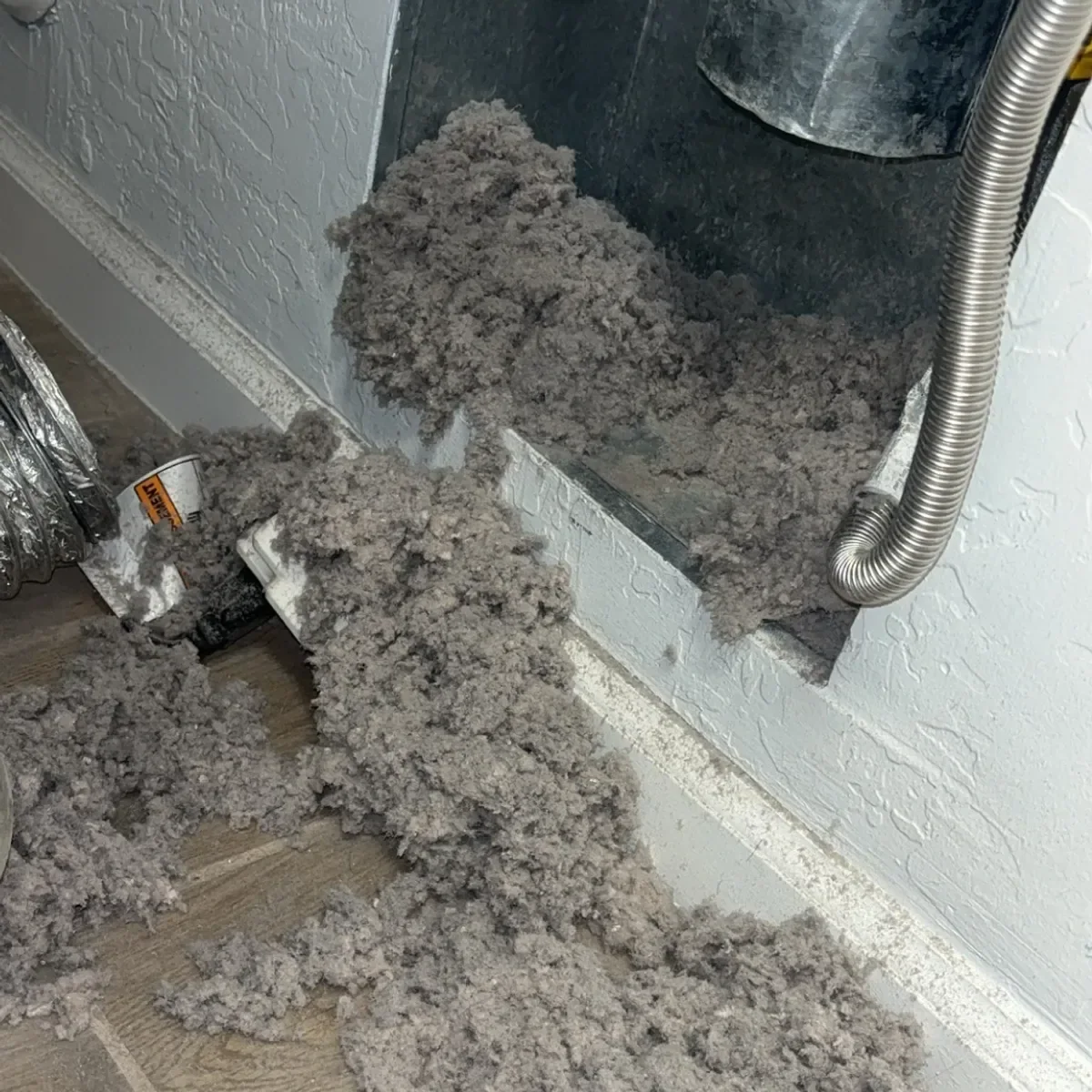
Nothing here was built with a laundry room
Maple-Ash and Mitchell Park contain some of the oldest surviving housing in the East Valley. Nineteen-twenties and thirties bungalows, forties and fifties ranches, tree-lined streets, and a historic district overlay on part of it.
These houses were not designed around a washer and dryer, because when they were built most people did not have one. The laundry went in later, into a converted back porch, a garage corner, a service alcove, or a closet somebody framed in during a remodel.
That means the vent run was retrofitted, sometimes more than once, and often by whoever owned the place at the time rather than by a contractor who cared. We have found runs here going out through a foundation wall, up through a roof that was never designed for it, routed twenty feet around obstacles to reach a wall eight feet away, and in one case simply terminating into a crawlspace.
So this is the part of Tempe where we genuinely cannot predict your configuration from the address. We find out when we get there, and we tell you what we find.
What a retrofit run gets wrong
A few patterns repeat, and they are worth knowing whether you call us or not.
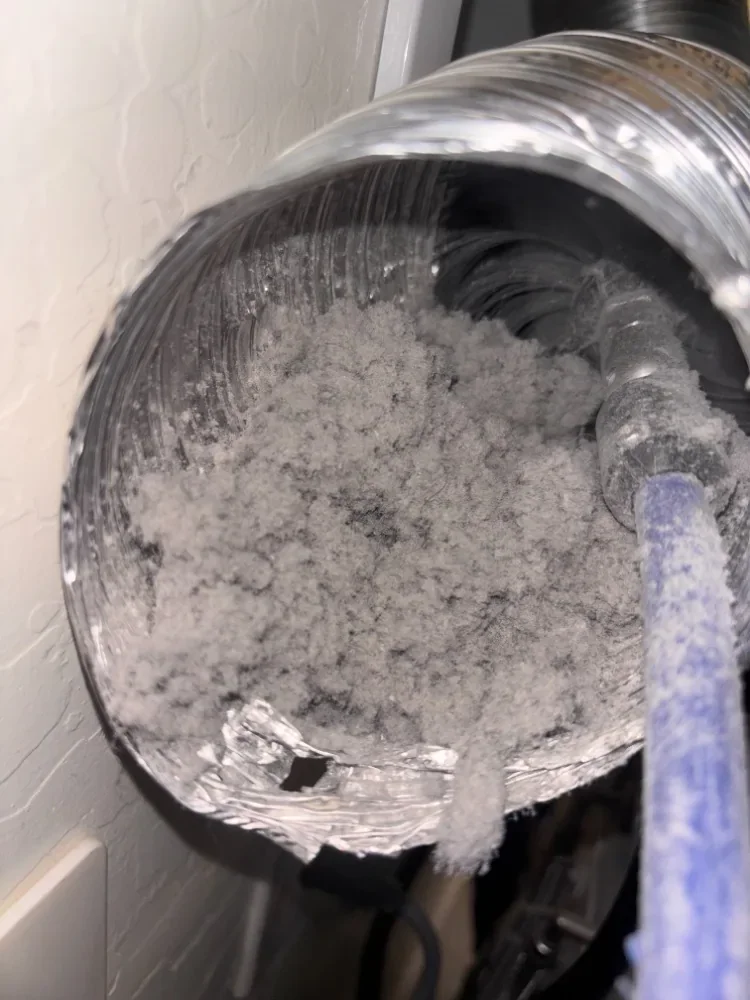
Flexible foil used as the main run. Somebody ran fifteen or twenty feet of corrugated flex through a wall cavity because it was easy to route around obstacles. The code calls for smooth-walled rigid metal for exactly this reason: every ridge catches lint, and a corrugated run accumulates faster than smooth pipe carrying identical air.
Runs far longer than they look. A retrofit routes around things instead of taking the direct path, so what should be an eight-foot run ends up being twenty-five with four elbows. Once you deduct five feet of allowance per ninety-degree elbow, a run like that is well past what the code contemplates before any lint is involved.
Terminations into the wrong place. A vent dumping into an attic, a crawlspace or a garage is putting several gallons of water a week into your house. That is not a cleaning problem, it is a repair, and we will tell you plainly if that is what you have rather than clean it and take your money.
Historic homes, and what we will not do
Practical note for anyone in the historic district or the surrounding streets. These houses have original materials worth protecting and some are under district guidelines.
We are not going to cut a new penetration, modify a roofline, or alter anything exterior without you knowing exactly what is proposed and why. Cleaning a vent should not change how your house looks. If a run genuinely needs rerouting that is a conversation and probably a different contractor, and we will say so rather than improvise on a ninety-year-old building.
What we will do is clean what is there, tell you honestly what condition it is in, and flag anything that looks like it was done badly during a remodel in 1984.
Source: National Fire Protection Association, Home Fires Involving Clothes Dryers and Washing Machines.
What the job looks like here
- Inspect the run. We find where it goes and how it terminates, check the exterior cap or roof hood, and look at the transition hose behind the machine. A surprising number of problems sit in the first three feet.
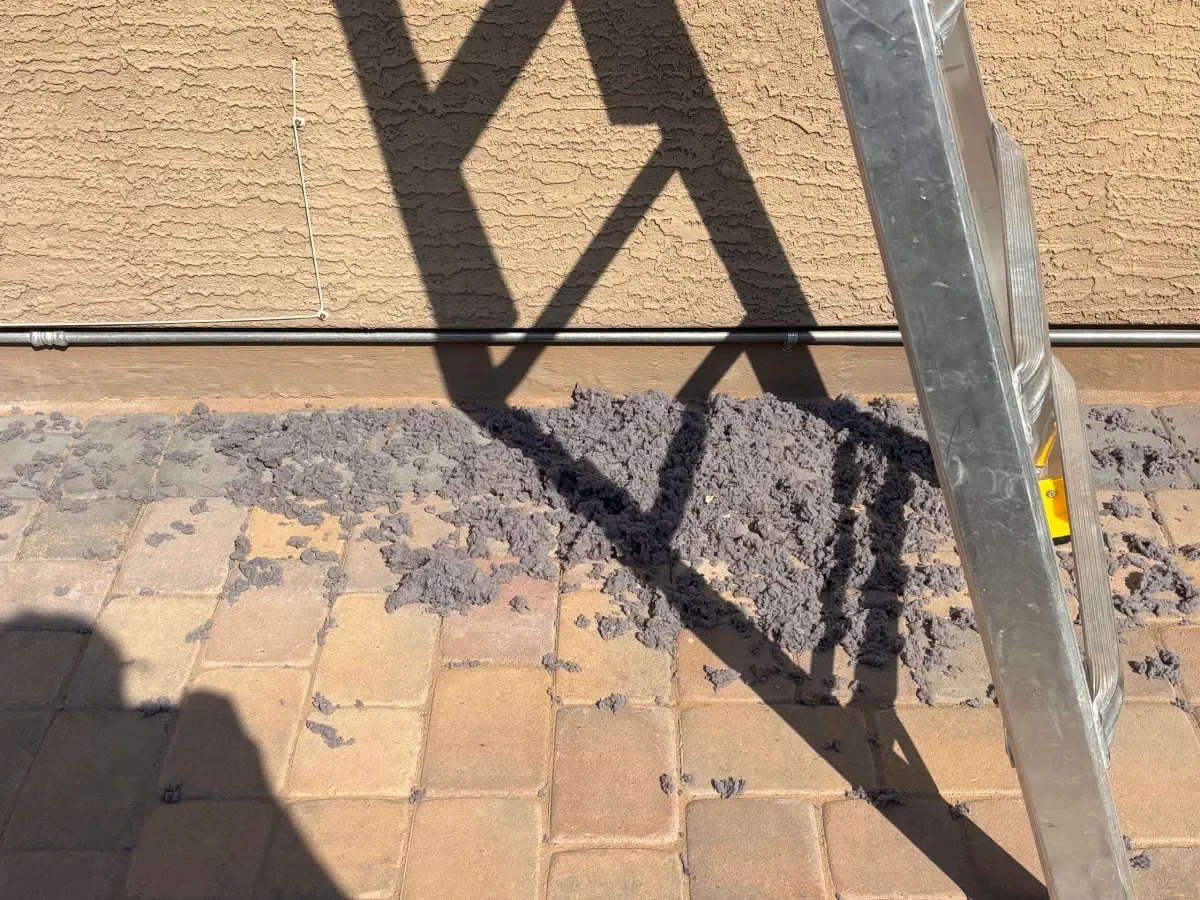
- Work it from the outside with the dryer running. We leave the machine running the whole time we are at the termination, so the air it is pushing carries the lint we agitate straight out of the run instead of letting it settle back down the pipe. It makes a mess outside. We clean that up.
- Work it from the inside. Machine unplugged, hose disconnected, dryer pulled back. We feed the brush through the vent from inside, bring the lint down toward us, and vacuum it up out of the wall rather than leaving it to resettle.
- Both ends on a long run, one end on a short one. A long run with several elbows gets worked from both sides, because a brush fed from one end alone never properly reaches the far half. A short straight run does not need it and we will not pretend otherwise.
- Put it back and show you. Dryer reconnected where it belongs, run to confirm, and the pile of what came out sitting where you can look at it.
How often you should be doing this
Every 10 months for a normal household. That is the schedule, not a suggestion.
- Every 10 months for a typical home
- Every 4 to 6 months for a big family, or a rental with several tenants sharing one machine
- Monthly for commercial machines
If you are waiting until the dryer gets slow to call somebody, you are not due for a cleaning. You are already about a year past due. A slow dryer is not the trigger, it is the symptom of a run that has been restricting airflow and cooking the machine for months before anybody noticed.
Questions from Maple-Ash and Mitchell Park homeowners
Do you charge extra to come out to Maple-Ash and Mitchell Park?
No. The price is $99 flat across every Tempe zip code, and this area sits in 85281. No travel fee, no zone pricing, no roof surcharge. Tempe is compact enough that zone pricing would be charging you for our drive rather than for anything you receive.
What happens when I call?
We take your street address and a preferred date and time, and we get you scheduled. That is genuinely it. You get the price on that call, which for a standard vent is $99 with roof access included, and most homes land within the same week. Same-day is usually available if you catch us early enough. Lines are open 7am to 8pm.
How often should I be doing this?
Every 10 months for a normal household. Every 4 to 6 months if you are a big family, or if the property is rented to several tenants sharing one machine. Monthly for commercial machines. Those are schedules, not suggestions. And if you are waiting until the dryer gets slow before calling anyone, you are not due for a cleaning, you are about a year past due.
How do I know whether I even need it?
Two signals. First, if your dryer is throwing an error code, it is the vent about 95 percent of the time, because newer machines detect restricted airflow well and code out before you notice slow drying. Second, run the dryer on air fluff and go feel the airflow at the exterior vent. Strong steady air means the duct is clear. Weak or none means it is restricted. Both checks are free.
How long will it take at my house?
Most homes in this area run 45 to 90 minutes. A short single-story side-wall run sits at the quick end. A long run with several elbows takes longer, because we work it from both the termination and the dryer end rather than just one side. A bird nest or a genuine blockage adds time, and you hear about that before we start rather than after.
Do I need to move the dryer before you arrive?
No. We unplug it, disconnect the hose and pull it back ourselves, then put it back where it was and run it before we leave. Nobody should be dragging an appliance across a laundry room floor on our account.
Other Tempe areas we cover
The Lakes and Lakeshore · Warner Ranch and South Tempe · Broadmor and Tempe Gardens · Escalante, Holdeman and Victory Acres · Dava, Optimist Park and central Tempe
Calls answered 7am to 8pm · same-day service usually available
$99 flat, roof vents included. Call or text.